Product Categories
-
- FH FHD pipe sewer inspection camera(18)
- H High definition drain sewer camera(14)
- A Simplified Pipe inspection camera(69)
- B Handheld Pipe inspection camera(79)
- PT Pan tilt Pipe inspection camera(17)
- L Telescope pole inspection camera(17)
- SJ Underwater inspection camera(16)
- Y Chimney inspection camera(16)
- T&R 512hz locator(12)
- T 512hz transmitter(12)
- digital locator(0)
- Wopson pipe camera(0)
- pipe probe(1)
- sewer inspection camera(10)
- drain & sewer services(0)
- pipe receiver(0)
- CCTV drain survey(0)
- drain inspection camera(0)
- pipeline video(13)
- inspection robot(0)
- pipe location(0)
- plumbing detector(13)
Contact Details
-
- Email : mary@wopson.com
- Phone : +86 16670203501/ 755 84691436 / HK +(852)6876 4558
- Fax : +86 755 84692156
- Address : Room E5,Unit F On 4th Floor ,Block E, East Sun Centre, No.16 Shing Yip Street, Kowloon
News
-
IP68 waterproof long cable positioning bore-scope for underwater deep well maintenance
2026-07-16
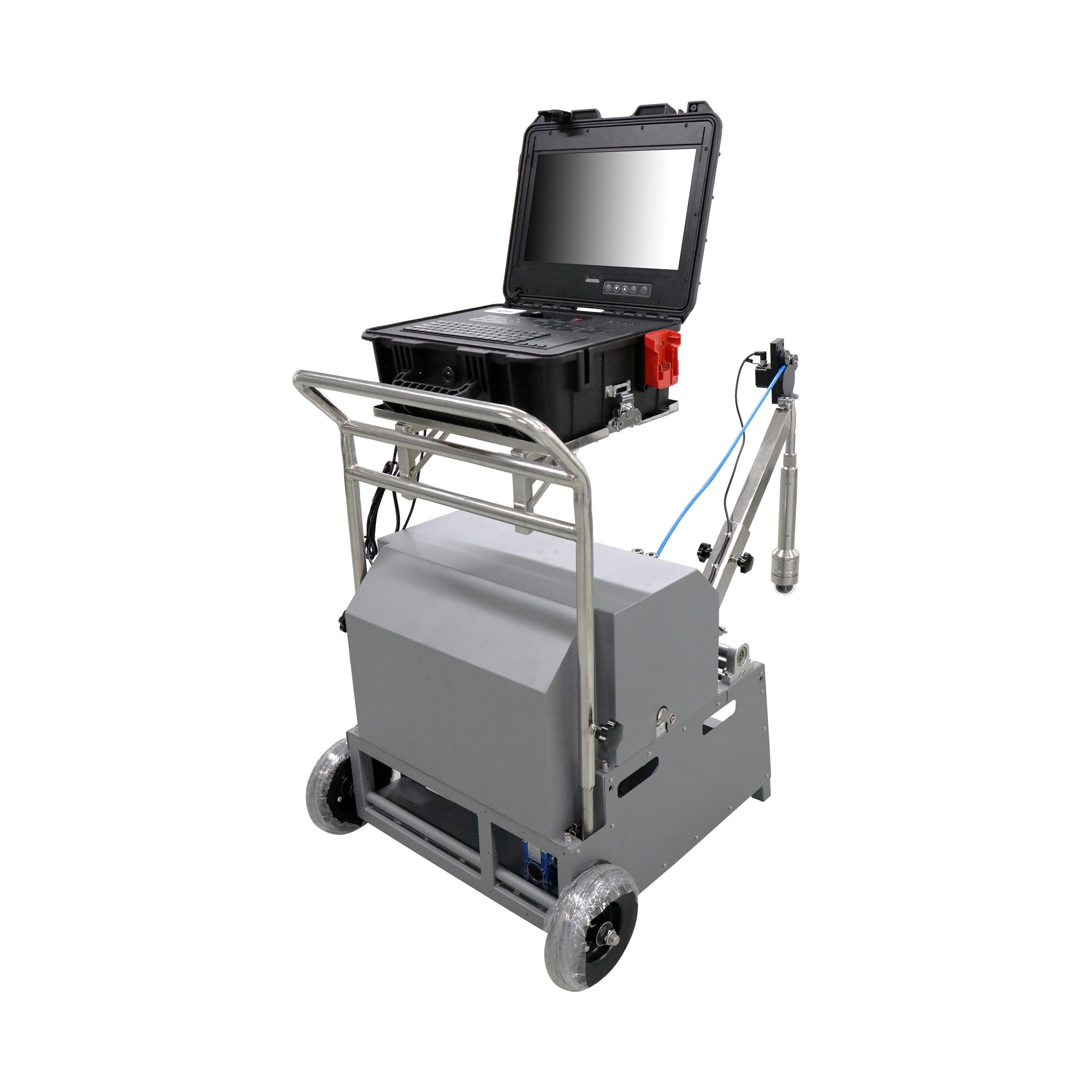
In 2026, the global municipal and industrial deep well maintenance industry widely adopts IP68 waterproof long cable positioning bore-scopes for underwater operation scenarios, solving the pain points of poor waterproof performance, short detection distance and inaccurate defect positioning of traditional equipment, and achieving full-depth, high-precision visual inspection of submerged deep wells while standardizing underwater maintenance workflows across the industry.
It is understood that the current global municipal deep well, industrial deep water well, and underground water collection well operation and maintenance industries are in a critical period of refinement and safety transformation and upgrading. Traditional detection equipment generally has shortcomings such as insufficient protection level, short detection cables, no precise positioning function, and blurred deep water imaging. Traditional inspections can only complete shallow spot inspections at the wellhead, and cannot go deep into the interior of 100-meter-level deep water wells to detect hidden defects such as pipe wall corrosion, cracks, situation, and interface damage. Problems such as large detection blind areas, high missed identification rates of hidden dangers, frequent repetitive operations, and no data traceability in operation and maintenance have long restricted the standardization and implementation of deep water deep well operation and maintenance. In order to meet the rigid needs of full-depth inspection of deep water deep wells and respond to the global trend of safe operation and maintenance of underground infrastructure, the industry has officially implemented the IP68 waterproof long-cable positioning endoscope deep well underwater maintenance solution. It has completed systematic technology upgrades in five dimensions: waterproof protection upgrade of the whole machine, ultra-long distance cable transmission, depth positioning calibration, deep water high-definition imaging, and deep well standardized operating procedures.
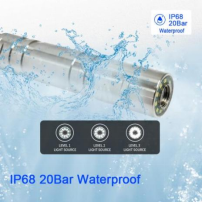
The entire underwater pipeline maintenance and inspection implementation process is standardized: operation and maintenance personnel configure corresponding extension cable equipment according to the length of the water-filled pipeline, and pass IP68 The waterproof protection structure enables immersion operations; after the probe enters the water-filled pipe, it carries out continuous traveling high-definition photography to complete long-distance pipe section without break-point collection; the probe is equipped with a 512hz locator to simultaneously record the corrosion, blockage, damage, and interface leakage defects of the underwater pipe wall; Finally, a complete underwater inspection image are generated to realize the integrated operation, maintenance, inspection, and acceptance of the water-filled drainage pipeline.
Compared with traditional IP67 protection, short-distance cable duct-less locator endoscopes, this IP68 long-cable underwater dedicated inspection solution has outstanding highlights. Through IP68 deep-water waterproof technology, 100-meter ultra-long transmission cables, 512hz locator upgrades, and underwater high-definition imaging technology, it effectively solves the industry problems of traditional equipment being unable to be immersed in deep water, long-distance signal attenuation, blurry images in water-filled environments, and incomplete detection coverage.
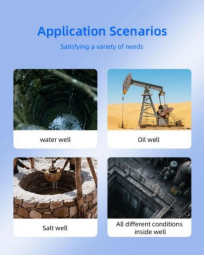
The large-scale implementation of the IP68 waterproof long-cable positioning endoscope deep well maintenance solution will bring all-round substantial upgrade value to the entire deep well operation and maintenance industry, equipment manufacturing companies, engineering service providers and terminal operation and maintenance units. From an industry level, this product redefines the visual inspection standards for deep water wells, ends the extensive operation and maintenance model of deep wells that have long relied on manual estimation, shallow spot inspections, and empirical judgments, and promotes deep well inspections into a full-depth, postposition, traceable, and data-based standardized era, effectively reducing the incidence of safety accidents such as deep well collapse, water leakage, and pipeline damage. According to overseas infrastructure operation and maintenance survey data, the use of IP68 deep water endoscopes with positioning has improved the accuracy of detecting hidden dangers in deep wells and reduced the cost of precision maintenance in the future.
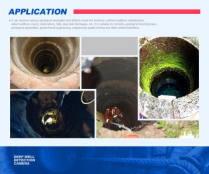
For inspection and operation and maintenance service providers, the equipment can enable a single person to efficiently complete the full-area inspection of ultra-deep wells without the need to repeatedly debug the equipment and conduct multiple explorations, significantly shortening the construction period and improving the project acceptance rate. For users of terminal water services, industrial and mining enterprises, it is possible to accurately detect internal diseases in deep wells in advance, achieve preventive maintenance, and avoid sudden failure shutdowns, water pollution, and underground safety accidents.
In the short term, the adoption of IP68 waterproof long-cable 512hz positioning endoscopes has solved the core pain points of deep well maintenance such as incomplete detection and inaccurate positioning, improved on-site efficiency, and reduced project maintenance costs. In the long run, this upgrade replaces the limitations of traditional manual and shallow inspections and promotes global underwater deep well maintenance towards standardized, digital, and traceable construction operations. In the future, fully waterproof, long-distance, and high-precision smart tube endoscopes will become the industry standard.